
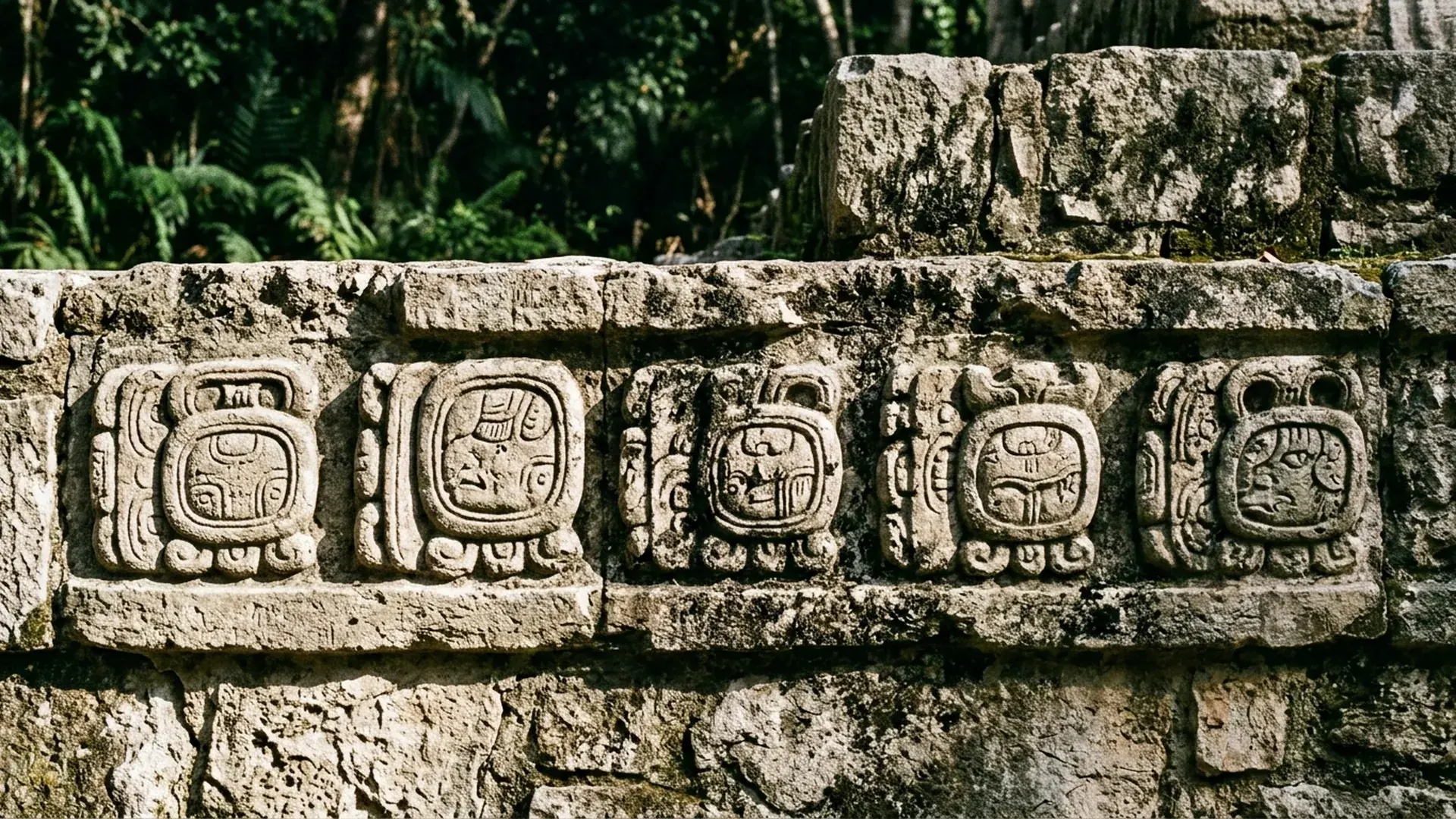
Trecena Numeral 12: Understanding
Retrospection, synthesis and sharing accumulated wisdom.
Trecena Numeral Attributes
In Classic Maya monumental epigraphy, numbers 1–13 are sacred numerical coefficients (Oxlahun) that pair with the 20 day signs across the 260-day Tzolk'in. Qualitative stage themes such as "Understanding" for Number 12 are 20th-century modern interpretations (Tier E), not ancient monumental inscriptions.
Carved as two dots above two stacked five-unit bars (•• / =), Trecena Numeral 12 (Lahka’ in Classic Yukatek) marks the penultimate twelfth day of the Tzolk’in trecena (Tier A, GMT 584283). Ancient Maya scribes used Lahka’ strictly within calendrical and dynastic distance counts (Tier B); modern associations with retrospective synthesis and shared comprehension belong exclusively to Tier E contemporary reflection.
Trecena Coefficient Qualities
- Modern Synthesis (Tier E): Retrospective integration, shared insight, and coherent review
- Epigraphic Role (Tier A/B): Two dots over two bars (Lahka’,
10 + 2), penultimate trecena step - Contemplative Theme (Tier E): Connecting isolated experiences into clear lessons
Position in the Trecena
Standing at day 12 of the thirteen-day trecena, Trecena Numeral 12 gathers the arc of the preceding eleven days right before the cycle culminates at coefficient 13.
Modern Reflection
Modern Interpretation (Tier E): Contemporary contemplative frameworks approach Trecena Numeral 12 as a dedicated moment for honest retrospectives, mentorship, and documenting lessons learned—distinct from historical Maya epigraphy.
Practitioners reflecting on this trecena numeral summarize key takeaways from recent work, exchange constructive feedback with peers, and integrate hard-won perspective.
5-Tier Epistemological Truth Standard
Explore the primary artifacts, peer-reviewed monographs, astronomical ephemerides, and living tradition ethnography behind this page.
Calculated Astronomical Fact
Deterministic conversion arithmetic conditional on the GMT 584283 correlation model linking the 260-day Tzolk'in and 365-day Haab' to Julian Day Numbers (JDN).
Primary Historical Evidence
- Dresden Codex Venus Table (pp. 24, 46–50)
- Quiriguá Stela C Long Count cosmogonic inscription (13.0.0.0.0 4 Ajaw 8 Kumk'u)
- Copán Altar Q dynastic succession monument
Scholarly Academic Interpretation
Goodman-Martínez-Thompson (GMT 584283) correlation model supported by academic consensus; Kennett et al. (2013) radiocarbon wiggle-matching strongly supporting the GMT correlation within confidence intervals.
Living Indigenous Tradition
Active Living Tradition: Maintained through continuous communal cultural lineage and living practice.Living ritual daykeeping actively practiced by contemporary Highland Guatemala K'iche' daykeepers (Ajq'ijab'), ethnographically documented by Barbara Tedlock (1982/1992).
Modern OmniZodiac Interpretation
Qualitative day-sign personal reflection archetypes, trecena guidance, and introspective calendar mindfulness.
Discover Your Birth Numeral & Nawal
Calculate your complete Maya Tzolk'in combination (number + day sign) using our high-precision client-side calculator.
Open Maya Sign Calculator →