Egyptian Temple of Hathor and Star Ceiling Decans
✦ Ancient Nilotic Astronomy ✦

Egyptian 36-Decan System

The 36 ten-degree divisions of the tropical ecliptic — from ancient stellar star-clocks to Hellenistic Egyptian astronomy.

✦ Egyptian 36-Decan Tradition ✦

5-Tier Epistemological Truth Standard

Explore the primary artifacts, peer-reviewed monographs, astronomical ephemerides, and living tradition ethnography behind this page.

Methodology Version: 2026.W05 Last Verified: September 2026
Tier A

Calculated Astronomical Fact

Continuous analytical VSOP87 solar ecliptic longitude partitioning the 360° tropical zodiac into thirty-six 10° decanal arcs, resolved to < 0.01° precision.

Tier B

Primary Historical Evidence

  • Asyut Necropolis coffin lid diagonal star tables (c. 2100 BCE, Middle Kingdom)
  • Tomb of Senenmut TT353 astronomical ceiling (c. 1473 BCE, 18th Dynasty)
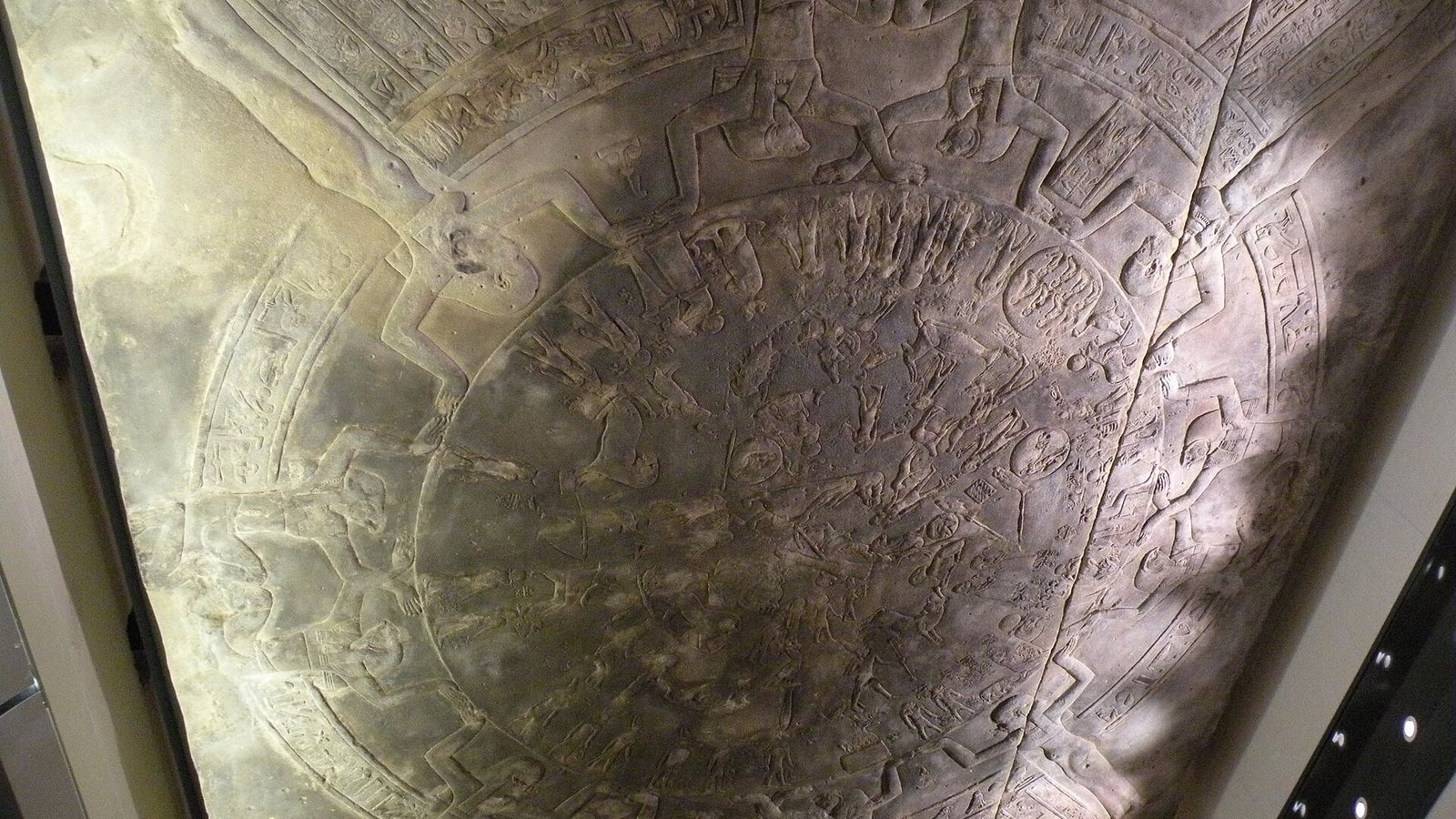
  • Dendera Temple of Hathor circular zodiac bas-relief (Louvre D 38, c. 50 BCE)
Tier C

Scholarly Academic Interpretation

Neugebauer & Parker (1960–1969) Egyptian Astronomical Texts (Vols. I–III) and von Bomhard (2008) Naos of the Decades epigraphic analysis.

Tier D

Living Indigenous Tradition

Historical Archival Tradition: Temple liturgy ceased in antiquity; reconstructed from primary documentary texts.

Historical archival tradition: Temple liturgical ceremonies ceased in late antiquity; reconstructed from primary hieroglyphic star clocks and Hellenistic papyri.

Tier E

Modern OmniZodiac Interpretation

Chaldean planetary ruler dignities, deity archetypes, and contemplative decanal themes; separated from ancient funerary omenology.

✦ Egyptian Astronomy Exhibition Stage ✦

Interactive 36-Decan Ecliptic Explorer

Inspect each decan's authentic Nilotic star-clock identity, Greek transcription, and Hellenistic Chaldean governor.

✦ Documented Epigraphic Source ✦

Nilotic Stellar Clocks & Dendera Planisphere

Three millennia of Egyptian star lore: From diagonal coffin star tables to Greco-Roman temple ceilings.

Musée du Louvre, Paris (Inv. D 38, c. 50 BCE) — 36 Decan divinities surrounding 12 zodiacal constellations
c. 2100 BCE

Middle Kingdom

Asyut Coffin Lid diagonal star tables tracking 36 decanal asterisms rising before dawn.

c. 1473 BCE

New Kingdom

Senenmut TT353 & Seti I KV17 astronomical ceilings registering Sah (Orion) & Sopdet (Sirius).

c. 50 BCE

Ptolemaic-Roman

Dendera circular planisphere synthesising 10° decanal divisions with the 360° tropical zodiac.

✦ MODERN VISUALIZATION — ARTIFACT-INSPIRED ✦

The 36 Ecliptic Sectors & Chaldean Sequence

Mathematical Alexandrian model of the 360° tropical ecliptic. Not an excavated Pharaonic object.

#1 ARI I ♂ Mars

ẖr-ẖnmw / ẖnmw (smꜣ)

Under Khnum / The Ram God Khnum (The Joiner / Uniter)

0°–10°
#2 ARI II ☉ Sun

ẖnt-ḥrt / ẖry-ẖpd-ẖnmw

Upper Foremost of the Basin / Hindquarter of Khnum

10°–20°
#3 ARI III ♀ Venus

ꜥrt / pt-ḥrt

The Jaw / Uraeus Ascending / Upper Sky

20°–30°
#4 TAU I ☿ Mercury

ḥry-bꜣ-sṯ / pds

He who is over Bastet / The Chest or Coffer

30°–40°
#5 TAU II ☽ Moon

knmt / tpy-ꜥ knmt

Kenmet (The Kenmet Bird / Darkened Land / Vineyard)

40°–50°
#6 TAU III ♄ Saturn

ḥry-jb knmt / sbšs

The One in the Midst of Kenmet / Sebshes

50°–60°
#7 GEM I ♃ Jupiter

tpy-ꜥ smd

Fore-part of Semed / Leader of Constellation Semed

60°–70°
#8 GEM II ♂ Mars

smd

Semed (The Eyebrow / Joined Constellation)

70°–80°
#9 GEM III ☉ Sun

mḥty smd / sšmw

Northern Semed / The Guide or Image

80°–90°
#10 CAN I ♀ Venus

tpy-ꜥ ḫntt

Foremost of the Southern Basin

90°–100°
#11 CAN II ☿ Mercury

ḫntt ḥrt

Upper Southern Basin

100°–110°
#12 CAN III ☽ Moon

ḫntt ẖrt

Lower Southern Basin

110°–120°
#13 LEO I ♄ Saturn

tpy-ꜥ wšꜣty / mnj

Fore-part of the Two Radiant Stars / The Mooring Post

120°–130°
#14 LEO II ♃ Jupiter

wšꜣty

The Two Radiant Stars / Two Luminaries

130°–140°
#15 LEO III ♂ Mars

bkꜣty

The Pregnant Stars / The Two Feathers

140°–150°
#16 VIR I ☉ Sun

tpy-ꜥ ꜣḥwy

Fore-part of the Two Brothers

150°–160°
#17 VIR II ♀ Venus

ꜣḥwy

The Two Brothers (Ahwy)

160°–170°
#18 VIR III ☿ Mercury

ḫt ꜣḥwy

Followers or Rear of the Two Brothers

170°–180°
#19 LIB I ☽ Moon

tpy-ꜥ ḫꜣw

Fore-part of the Thousands / Offerings

180°–190°
#20 LIB II ♄ Saturn

ḫꜣw

The Thousands / The Myriad Stars

190°–200°
#21 LIB III ♃ Jupiter

ḫt ḫꜣw

Rear of the Thousands

200°–210°
#22 SCO I ♂ Mars

tpy-ꜥ ꜥrt

Fore-part of the Uraeus / Sacred Serpent

210°–220°
#23 SCO II ☉ Sun

ꜥrt

The Uraeus Serpent / The Crown

220°–230°
#24 SCO III ♀ Venus

ḫt ꜥrt / srm

Followers of the Uraeus / Serem

230°–240°
#25 SAG I ☿ Mercury

tpy-ꜥ ḫws

Fore-part of Khous / The Builder

240°–250°
#26 SAG II ☽ Moon

ḫws

Khous (Pounding / Laying Foundation)

250°–260°
#27 SAG III ♄ Saturn

ḫt ḫws

Followers of Khous

260°–270°
#28 CAP I ♃ Jupiter

tpy-ꜥ wꜥrt

Fore-part of the Lower Leg / District

270°–280°
#29 CAP II ♂ Mars

wꜥrt

The Lower Leg (Wa-ret) / Foot

280°–290°
#30 CAP III ☉ Sun

ḫt wꜥrt

Followers of the Lower Leg

290°–300°
#31 AQU I ♀ Venus

tpy-ꜥ sꜣḥ

Fore-part / Leader of Sah (The Orion Constellation)

300°–310°
#32 AQU II ☿ Mercury

sꜣḥ

Sah (Osiris / Constellation of Orion)

310°–320°
#33 AQU III ☽ Moon

ḫt sꜣḥ

Rear / Followers of Sah (Orion)

320°–330°
#34 PIS I ♄ Saturn

tpy-ꜥ spdt

Leader of Sopdet (Sirius / Sothis)

330°–340°
#35 PIS II ♃ Jupiter

spdt

Sopdet (Sirius / Sothis / Isis)

340°–350°
#36 PIS III ♂ Mars

knmw

Kenemu (The Cloaked / Veiled Asterism)

350°–360°

Find Your Egyptian Decan

Calculate your exact decan degree, Chaldean planetary ruler, and ancient deity archetype.

Open Decan Calculator → →
Dendera Temple of Hathor Circular Planisphere Sandstone Ceiling Relief
✦ Archaeological & Celestial Record ✦

The Dendera Circular Celestial Planisphere

Ptolemaic Egyptian ceiling relief from the Temple of Hathor at Dendera depicting the 36 decanal star gods, constellations, and solar-lunar eclipse axes.

Musée du Louvre, Paris (Inv. D 38, c. 50 BCE) / Open Access

Tier B: Documented Historical Material

✦ ✦ Chaldean Planetary Ruler Cycle

The ancient Chaldean order assigns a planetary ruler to each ten-degree decan in a repeating seven-planet sequence:

♂ Mars ☉ Sun ♀ Venus ☿ Mercury ☽ Moon ♄ Saturn ♃ Jupiter ↻ ↻ cycle repeats

✦ ✦ The 36 Decans by Zodiac Sign

The 36 ten-degree divisions of the tropical ecliptic — from ancient stellar star-clocks to Hellenistic Egyptian astronomy.

✦ Methodological Stratification ✦

The Four-Layer Architectural Framework

To prevent historical fabrication, OmniZodiac maintains a strict four-layer separation across three millennia of Egyptian astronomical evolution:

Layer 1: c. 2100–1473 BCE

Nilotic Stellar Clocks

Diagonal star tables painted on Middle Kingdom Asyut coffin lids and New Kingdom royal tomb ceilings (Senenmut TT353, Seti I KV17). Used exclusively for measuring the 12 nocturnal hours and coordinating agricultural calendars, independent of the 12-sign zodiac.

Layer 2: c. 300–50 BCE

Hellenistic 10° Ecliptic Synthesis

In Ptolemaic Alexandria, thirty-six indigenous Egyptian decanal asterisms were mapped into 10° sectors of the 360° Babylonian/Hellenistic solar ecliptic, physically immortalized on the sandstone Dendera Circular Planisphere (Louvre D 38).

Layer 3: Classical Hellenistic

Chaldean Planetary Governors

The ancient descending planetary speed sequence (Saturn → Jupiter → Mars → Sun → Venus → Mercury → Moon), beginning at Mars for Aries Decan 1 and repeating cycling through the entire 360° ecliptic circle.

Layer 4: Modern Era

Archetypal & Psychological Reflection

Modern symbolic characterizations for introspection, creative writing, and psychological reflection. Clearly distinguished from ancient funerary omenology and viral 1990s pseudo-Egyptian deity tables.

✦ ARCHAEOLOGICAL EVIDENCE & HISTORICAL CEILINGS ✦

Nilotic Archaeoastronomy Dossier

Six primary epigraphic monuments, astronomical ceilings, and planispheres documenting the 2,000-year evolution from indigenous stellar star-clocks to Hellenistic Alexandria.

Diagonal star clock tables painted inside Middle Kingdom wooden coffin lid from Asyut
Epigraphic Monument 01 / 06 Asyut Necropolis, Upper Egypt

Asyut Coffin Lid Diagonal Star Tables

Historical Period & Dynasty
Middle Kingdom (c. 2100–1900 BCE, 9th–12th Dynasties)
Excavation Site & Current Repository
Egyptian Museum Cairo / Roemer-Pelizaeus Museum / British Museum

Archaeoastronomical Significance

The earliest documented epigraphic record of the 36 decans (baktiu). These diagonal tables functioned exclusively as nocturnal star-clocks tracking the 12 hours of the night across 10-day decades, independent of any 12-sign zodiac.

Monumental astronomical ceiling in the tomb of Senenmut TT353 at Deir el-Bahari
Epigraphic Monument 02 / 06 Deir el-Bahari, Theban Necropolis, Upper Egypt

Astronomical Ceiling of Senenmut (Tomb TT353)

Historical Period & Dynasty
New Kingdom, 18th Dynasty (c. 1473 BCE, Reign of Queen Hatshepsut)
Excavation Site & Current Repository
In situ Tomb TT353 / Metropolitan Museum of Art Survey (MMA 32.3.431)

Archaeoastronomical Significance

The oldest surviving complete monumental astronomical ceiling painting in Egypt. It maps the northern circumpolar constellations (Meskhetiu/Bull's Thigh) and the southern decanal registers with lunar calendar circles.

Vaulted astronomical ceiling in the burial chamber of Pharaoh Seti I KV17
Epigraphic Monument 03 / 06 Valley of the Kings, Theban Necropolis, Luxor

Tomb of Seti I Celestial Vault (KV17)

Historical Period & Dynasty
New Kingdom, 19th Dynasty (c. 1279 BCE)
Excavation Site & Current Repository
In situ Tomb KV17 (Belzoni Tomb)

Archaeoastronomical Significance

Monumental vaulted ceiling demonstrating the New Kingdom evolution of decanal cosmography, where each decanal star asterism represents an immortal guardian guiding the pharaoh's soul through the nocturnal sky.

Circular sandstone bas-relief of the Dendera Zodiac ceiling in the Musée du Louvre
Epigraphic Monument 04 / 06 Chapel of Osiris, Temple of Hathor, Dendera, Upper Egypt

Dendera Circular Planisphere Bas-Relief (Louvre D 38)

Historical Period & Dynasty
Ptolemaic-Roman Transition (c. 50 BCE, Reign of Cleopatra VII / Caesar)
Excavation Site & Current Repository
Musée du Louvre, Paris, France (Inv. D 38)

Archaeoastronomical Significance

The definitive physical proof of the intercultural synthesis in Alexandria, where 36 indigenous Egyptian decanal asterisms were mapped into 10-degree sectors of the 12-sign Babylonian/Hellenistic solar ecliptic.

Granite epigraphic register of the Naos of the Decades documenting 36 decan deities
Epigraphic Monument 05 / 06 Underwater site of Thonis-Heracleion, Canopic Coast

Naos of the Decades Monolithic Shrine

Historical Period & Dynasty
Late Period, 30th Dynasty (c. 380 BCE, Reign of Nectanebo I)
Excavation Site & Current Repository
Graeco-Roman Museum, Alexandria (Reconstructed by Anne-Sophie von Bomhard 2008)

Archaeoastronomical Significance

Provides the philological link proving that prior to Hellenistic zodiacal adaptation, the Egyptian decans had already evolved into cosmological governors presiding over climate, terrestrial events, and spiritual protection.

Monumental stone columns of Karnak Temple aligned to the Winter Solstice sunrise corridor
Epigraphic Monument 06 / 06 Karnak Temple of Amun-Ra & Giza Plateau, Egypt

Karnak Solstice Corridor & Giza Meridian Alignment

Historical Period & Dynasty
Old Kingdom to New Kingdom (c. 2560–1400 BCE)
Excavation Site & Current Repository
In situ Archaeological Monuments, UNESCO World Heritage Sites

Archaeoastronomical Significance

Empirical physical architecture demonstrating ancient Egyptian solar and stellar observation: Karnak aligns with the winter solstice sunrise, while Giza aligns with astronomical True North to within 4 minutes of arc.