

✦ Verified Classic Epigraphy ▾
Carved bas-relief visualization grounded in Classic Maya monumental stone inscriptions and Postclassic screenfold codices. Mathematical vector geometry preserved without AI distortion or pseudo-glyph fabrication.
✦ RESEARCH & EPIGRAPHIC SOURCES DOSSIER ✦ →Ik' (Iq')
Embodying the sacred spirit of wind, spirit, breath of life, aligned with the north direction in the sacred 260-day Tzolk'in count.
Ik' (Iq') Epigraphic Provenance Record
Scholarly epigraphic morphology, hieroglyphic decipherment concordances, and archaeological occurrences from monumental inscriptions and pre-Columbian codices.
Epigraphic Taxonomy
- Thompson Catalog
T503- Logographic Value
IK' (Wind / Divine Breath / Soul)- Phonetic Reading
i-k'i- Classic Monuments
- Palenque Temple of the Inscriptions (East Tablet); Quiriguá Stela D; Copán Structure 22
- Screenfold Codices
- Dresden Codex, pp. 29a–30c (God B Chaak wind almanacs)
Glyph Morphology & Diagnostics
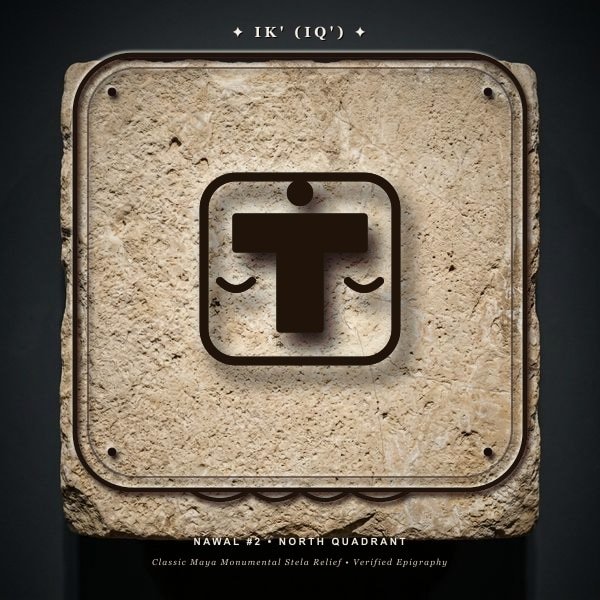
Iconic T-shaped Tau wind aperture symbolizing divine breath, flanked by undulating atmospheric breath scrolls.
Epigraphic & Cosmological Taxonomy
Archaeological classification, epigraphic morphology, and quadripartite cosmology grounded in Classic monumental inscriptions.
Linguistic & Nawal Identity
- Yukatek Maya
- Ik'
- Highland K'iche'
- Iq'
- Archetypal Symbolism
- Wind, Spirit, Breath of Life
- Popol Vuh Concordance
- Sacred Cholq'ij Daykeeper Tradition
Quadripartite Cosmology
- Cardinal Direction
- North (Xaman)
- Ceremonial Pigment
- Sak (White Calcite / Lime)
- Mesoamerican Element
- Air & Ancestral Wisdom
- World Tree Quarter
- North World-Tree · Spiritual Solitude, Breath & Ancestors
Hieroglyphic Morphology & Inscription Registers
- Monumental Relief Inscriptions
- Palenque Temple of the Inscriptions; Quiriguá Stela D; Copán Structure 22
- Screenfold Codex Occurrences
- Dresden Codex, pp. 29a–30c (God B Chaak wind almanacs)
- Diagnostic Visual Traits
- Iconic T-shaped Tau wind aperture symbolizing divine breath, flanked by undulating atmospheric breath scrolls.
- Scholarly Thompson Concordance
- Eric Thompson (1950) Maya Hieroglyphic Writing
✦ RESEARCH & EPIGRAPHIC SOURCES DOSSIER ✦
Iconic T-shaped Tau wind aperture symbolizing divine breath, flanked by undulating atmospheric breath scrolls.
Palenque Temple of the Inscriptions; Quiriguá Stela D; Copán Structure 22
Dresden Codex, pp. 29a–30c (God B Chaak wind almanacs)
Ik’ is the second day sign of the Tzolk’in, symbolizing the vital breath (ik’), wind, and spirit that permeates all creation. It represents communication, unseen forces, and the dynamic movement of atmosphere and intellect.
Nawal Qualities
- Vital Breath: Represents the life force carried through respiration and invisible movement.
- Communicative Power: Associated with speech, song, ideas, and the transmission of wisdom.
- Transformative Wind: Cleanses stale energies and introduces flexibility into stagnant structures.
Direction & Color
Associated with the North (Xaman) and the color white (Sak). North represents the realm of ancestral wisdom, air currents, and purification.
K’iche’ Correspondence
In Highland K’iche’ Maya tradition, this day sign is known as Iq’. Highland daykeepers revere Iq’ as the sacred breath of the cosmos and the wind that sweeps away negativity and brings spiritual renewal.
Modern Reflection
Confidence Level: Modern Interpretation
From a modern reflective standpoint, Ik’ highlights the role of communication, breathwork, and mental clarity in everyday experience. It provides an archetype for cultivating flexibility when facing unpredictable changes.
In contemporary practice, engaging with Ik’ energy encourages mindful listening and authentic vocal expression. It serves as a symbolic prompt to clear mental clutter and embrace fresh perspectives.
Sources & Further Reading
Based on Classic Maya glyphic decipherments by Linda Schele and ethnographic field studies of Highland Guatemala by Barbara Tedlock.
Monumental Inscriptions & Epigraphic Provenance
How Ik' was carved into Classic Maya stone stelae and painted in hieroglyphic screenfold codices.

Epigraphic Field Analysis
The iconic T-shaped Ik' Tau glyph was carved as both sacred architectural wind vents in temples and as daybearer dates in royal long count stelae.
Palenque & Quiriguá · Monumental Stelae & Altars
5-Tier Epistemological Truth Standard
Explore the primary artifacts, peer-reviewed monographs, astronomical ephemerides, and living tradition ethnography behind this page.
Calculated Astronomical Fact
Continuous integer modulo arithmetic converts civil dates to Julian Day Numbers (Meeus/Fliegel-Van Flandern) with the GMT 584,283 correlation constant, deterministically yielding Nawal index (0–19) and sacred Tone (1–13).
Primary Historical Evidence
- Dresden Codex Hieroglyphic Screenfold Manuscript (pp. 46–58 Venus & Eclipse Tables)
- Quiriguá Stela C Creation Inscription (13.0.0.0.0 4 Ajaw 8 Kumkʼu)
- Monumental Classic Stone Inscriptions (Nawal Ik')
- Copán Structure 16 Altar Q Dynastic Register
Scholarly Academic Interpretation
Goodman-Martínez-Thompson (GMT 584283) correlation consensus (Thompson 1950, Lounsbury 1983) strongly supported by high-resolution AMS radiocarbon dating on carved sapodilla lintels within 95% confidence intervals (Kennett et al. 2013, Scientific Reports).
Living Indigenous Tradition
Active Living Tradition: Maintained through continuous communal cultural lineage and living practice.Living ritual daykeeping documented among contemporary Highland Kʼicheʼ Ajqʼijabʼ in Momostenango and adjacent communities (Barbara Tedlock 1982/1992).
Modern OmniZodiac Interpretation
Introspective archetypal reflection exploring the symbolic harmony of Nawales and Tones for personal self-awareness, strictly free of fatalistic prediction.
Calculate Your Maya Birth Sign
Find out if Ik' is your birth Nawal using your date of birth and the GMT 584283 scholarly correlation model.
Classic Maya Tzolk'in Exploration
Continue your sacred calendar journey through Highland K'iche' traditions and Kennett GMT 584283 astronomy.

Calculate Your Maya Day Sign
Find your natal Nawal, sacred numeral (1–13), and trecena directional patron.
