
Decan Specifications
tpy-ꜥ ꜣḥwy Historical Nilotic Star Clock & Source
Dendera Circular Zodiac & Hellenistic Graeco-Egyptian (EAT III Table 5; Hephaestio 1.1; Liber Hermetis 25)

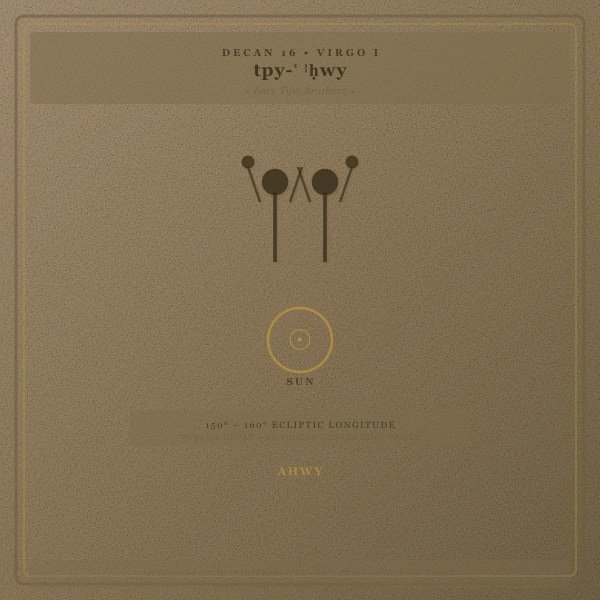
tpy-ꜥ ꜣḥwy
« Fore-part of the Two Brothers » Dendera Circular Zodiac & Hellenistic Graeco-Egyptian (EAT III Table 5; Hephaestio 1.1; Liber Hermetis 25)
Neugebauer & Parker (1969) EAT III Table 5 p. 68; Hephaestio 1.1; von Bomhard (2008)
In Hephaestio: Apollon / Achos (Ἄχος). Attested at Dendera with twin deities representing paired brotherly stars.
Modern Calculation — Artifact-Inspired
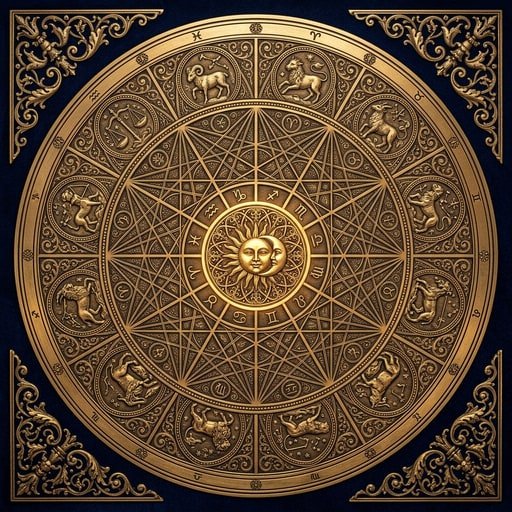
Hellenistic 10° Ecliptic Arc — Virgo (150° – 160°)
Mathematical Alexandrian model of the 360° tropical ecliptic. Not an excavated Pharaonic object.
Sun (☉)
Chaldean Order Cycle: Step 2 of 7 in the classical descending planetary sphere sequence.
Decan 16 spans 150° to 160° of the ecliptic (0°–10° Virgo), introducing the mutable earth sign of Virgo. This decan combines meticulous empirical observation with intellectual illumination and dedication to service.
Historical Context
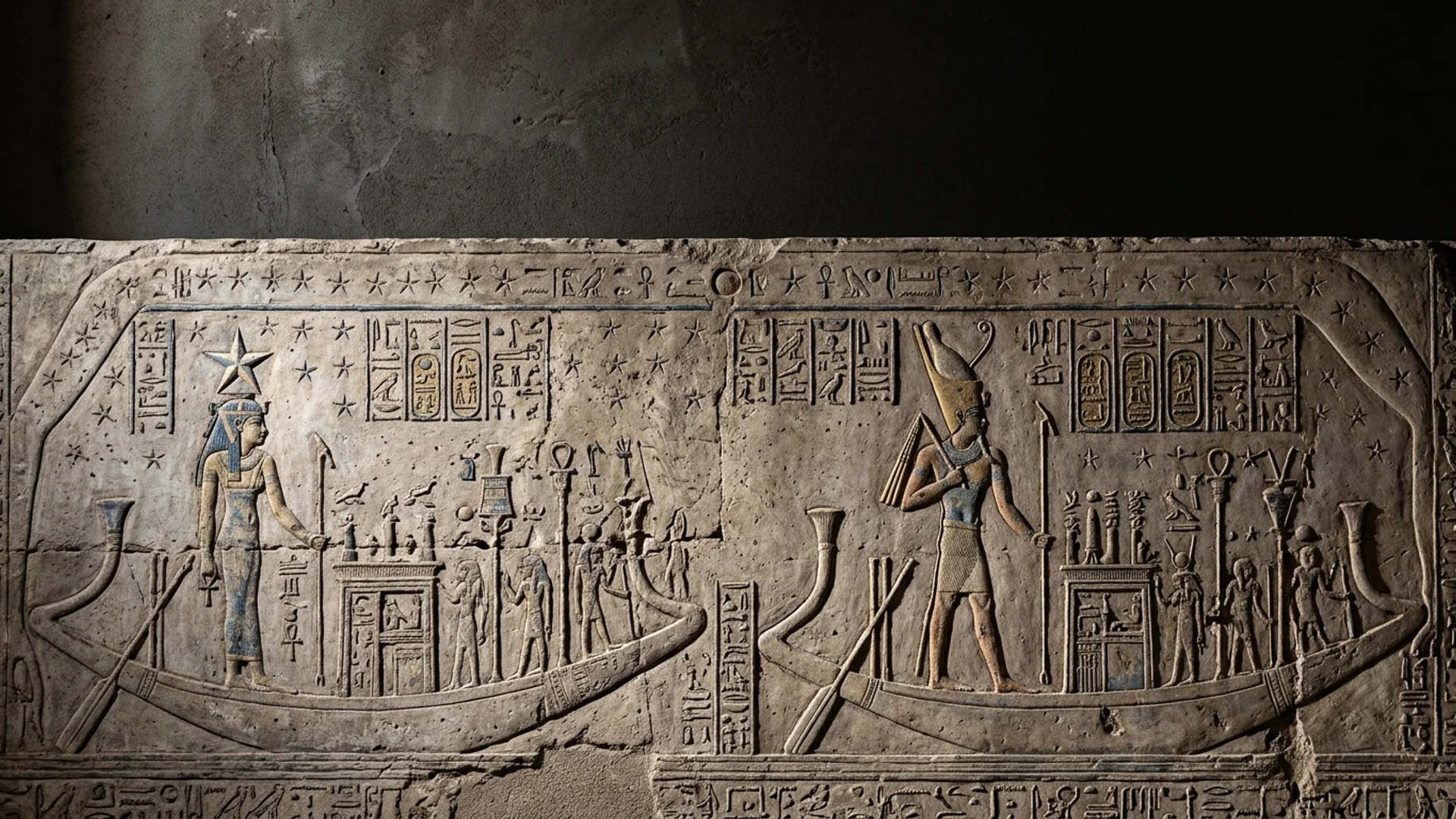
In ancient Egypt, decans originated as a system of 36 asterisms (baktiu) observed rising heliacally before dawn across 10-day intervals (decades) to measure the nocturnal hours and agricultural seasons. In the documented Hellenistic-Egyptian tradition (Dendera circular planisphere, Hephaestio of Thebes 1.1, and Liber Hermetis 25), this sector is identified as tpy-ꜥ ꜣḥwy (“Fore-part of the Two Brothers”).
In Hephaestio: Apollon / Achos (Ἄχος). Attested at Dendera with twin deities representing paired brotherly stars. Scholarly documentation: Neugebauer & Parker (1969) EAT III Table 5 p. 68; Hephaestio 1.1; von Bomhard (2008).
Zodiacal Association
In the Hellenistic-Egyptian Zodiac Context, 0°–10° Virgo was established as the opening decan of mutable earth, focusing radiant solar attention on precision, analysis, and practical craft.
Chaldean Ruler: Sun
The Sun rules this decan in the Chaldean order, illuminating Virgo’s analytical mindset with clarity, purpose, and a drive for perfection and mastery.
Modern Interpretation
In Modern Popular Interpretation, astrologers view this decan as bestowing intellectual clarity, thoroughness, and a high standard of personal craftsmanship. People with placements here are often seen as dedicated researchers, editors, or specialists.
This personality analysis is a feature of Modern Popular Interpretation, distinct from the astronomical tracking methods of ancient Egyptian decanal timekeeping.
Decan 16: tpy-ꜥ ꜣḥwy Epigraphic Register
Documented philological transliterations, Hellenistic Greek transcriptions, Ptolemaic zodiac sector bounds, and Chaldean planetary governance.
Ancient Nilotic Epigraphy
- Transliteration
tpy-ꜥ ꜣḥwy- Documented Meaning
- « Fore-part of the Two Brothers »
- Stellar Asterism Family
- Ahwy (The Twin Brothers)
- Primary Epigraphic List
- Dendera Circular Zodiac & Hellenistic Graeco-Egyptian (EAT III Table 5; Hephaestio 1.1; Liber Hermetis 25)
Hellenistic Alexandria Synthesis
- Zodiac Sign & Face
- 1st (0°–10°) Virgo
- Ecliptic Longitude Arc
150.00° – 160.00°- Hellenistic Sector Name
- Virgo 0°–10° (150°–160° ecliptic longitude)
Chaldean Planetary Governor
- Planetary Governor
- ☉ Sun
- Planetary Speed Order
- Saturn → Jupiter → Mars → Sun → Venus → Mercury → Moon
- Material Basis
- Ptolemaic Sandstone Relief
- Representative Plate
- Dendera Circular Planisphere Sandstone Ceiling Relief (Musée du Louvre, Inv. D 38)
1-Click Citation Export
Standard formatted academic citations for research publications, peer-reviewed bibliographies, and scholarly reference.
5-Tier Epistemological Truth Standard
Explore the primary artifacts, peer-reviewed monographs, astronomical ephemerides, and living tradition ethnography behind this page.
Calculated Astronomical Fact
Continuous analytical VSOP87 solar ecliptic longitude partitioning the 360° tropical zodiac into thirty-six 10° decanal arcs, resolved to ~1 arcminute physical precision.
Primary Historical Evidence
- Asyut Necropolis coffin lid diagonal star tables (c. 2100 BCE, Middle Kingdom)
- Tomb of Senenmut TT353 astronomical ceiling (c. 1473 BCE, 18th Dynasty)
- Dendera Temple of Hathor circular zodiac bas-relief (Louvre D 38, c. 50 BCE)
Scholarly Academic Interpretation
Neugebauer & Parker (1960–1969) Egyptian Astronomical Texts (Vols. I–III) and von Bomhard (2008) Naos of the Decades epigraphic analysis.
Living Indigenous Tradition
Historical Archival Tradition: Temple liturgy ceased in antiquity; reconstructed from primary documentary texts.Historical archival tradition: Temple liturgical ceremonies ceased in late antiquity; reconstructed from primary hieroglyphic star clocks and Hellenistic papyri.
Modern OmniZodiac Interpretation
Chaldean planetary ruler dignities, seasonal stellar motifs, and contemplative decanal themes; separated from ancient funerary omenology.
Explore Decan 16 Connections
Discover which of the 36 sacred Egyptian decans governs your precise birth date and planetary degree.
Pharaonic 36-Decan Star Map
Deepen your relationship with Egyptian decanal astronomy, Chaldean rulers, and temple ceilings.

Calculate Your Egyptian Decan
Identify your natal EAT III star-clock asterism, solar degree, and 10° Chaldean ruler.

Scholarly Variant Readings & Philological Commentary
In Hephaestio: Apollon / Achos (Ἄχος). Attested at Dendera with twin deities representing paired brotherly stars.